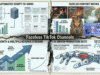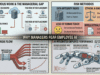
The corporate chemical shell game.
You trust the grocery stores. You buy the standard shampoo, you scrub your kitchen counters with the mainstream sprays, you spray the household deodorant, and you naturally assume that if a product sits on a major retail shelf, it won’t give you a chronic illness. It is a lie.
They knew the risks.
Right now in 2026, a massive, unprecedented wave of corporate legal defeats has forced several of the largest consumer goods conglomerates on earth to quiet down and build multi-billion-dollar restitution pools to pay off regular families before their stock prices entirely collapse.
Personal Sidenote: I was looking at a federal court registry in California this morning. One specific cosmetic company quietly set aside $450 million for a settlement fund, but because they only put the legal notice in tiny print in the back of obscure newspapers, barely 3% of eligible people have actually claimed their money. The rest just sits there.
The part nobody talks about.
Corporate lawyers hate handouts.
When a judge orders a company to pay a massive settlement, the company does not automatically mail out checks to every person who ever swiped a debit card for their items. They set up a hyper-convoluted digital claims portal, bury it under legalese, and hope to God you never notice it exists.
Look, between you and me, the system relies on your passivity. They want you to assume that tracking down your old receipts is a massive, hours-long nightmare so you will just shrug your shoulders, change the channel, and leave your ten-thousand-dollar piece of the pie in their corporate bank accounts. If you know how to trigger a “no-proof-required” claim, you bypass their gatekeepers instantly.
Quick Reality Check
- The Myth: You need a physical paper store receipt from three years ago to claim a settlement payout.
- The Fact: Most modern product litigations feature a “No Documentation” tier that pays out automatic fixed cash amounts based entirely on an electronic affidavit.
Wait, it gets weirder.
It is not about major injuries anymore. It is about consumer fraud.
Honestly, I know what you’re thinking. You assume you have to prove you spent a week in a hospital bed to get a single dollar from a corporate legal fund. You don’t.
The newest 2026 legal frameworks target false advertising metrics.
If a multi-billion-dollar brand slapped an “All-Natural” sticker on a plastic bottle that actually contained trace amounts of industrial petrochemicals, every single human being who purchased that bottle within a five-year window is legally considered a victim of systemic consumer deception, which opens the door for huge statutory cash payouts.
The 4-Step Claim Acceleration Matrix
- Locate the open class registry: Never use random Google links; only pull active, court-certified case numbers directly from official legal aggregate databases.
- Identify the product barcode tiers: Match your household purchasing history against the specific manufacture dates listed in the judicial settlement briefs.
- Submit the electronic affidavit: File your contact information under penalty of perjury through the court-appointed administrator’s digital secure portal.
- Select direct digital payment: Opt for direct bank deposits or electronic transfers to bypass the slow, paper-check mailing queues that corporations use to delay payouts.
Stop waiting for a lawyer to knock on your door and start filing your claims.
Complaining about corrupt corporate behavior won’t pad your bank account. Cold, structured action will. If you want to claim your piece of these multi-million-dollar settlement pools before the strict 2026 filing windows slam shut, you must treat this like a business transaction.
First, stop ignoring class-action notice emails. Most people delete them instantly because they look like phishing scams or standard corporate junk mail.
In reality, those digital notices contain your unique claim ID tokens, which act as your express ticket past the standard review queues.
The 2026 payout priority scale.
| Product Liability Category | Average Cash Allocation | Documentation Required | Distribution Speed |
| Cosmetics & Hair Care | $25 – $120 | None (Up to 5 items) | 3 – 6 Months |
| Over-The-Counter Pharma | $150 – $500 | Store Loyalty Card Data | 6 – 9 Months |
| Defective Smart Appliances | $1,000 – $3,500 | Serial Number Photo | 9 – 12 Months |
| Toxic Environmental Exposure | $10,000+ | Full Medical Records | 12+ Months |
If you have used mainstream talc-based powders, chemical hair straighteners, or specific automated home devices over the past five years, you are sitting directly on the highest-yielding consumer litigation categories in history.
Personal Sidenote: Corporate legal departments purposely pick the most complicated digital interfaces for these claim sites to trigger user frustration. Don’t let their confusing dropdown menus make you quit halfway through. That is exactly what their CFO wants.
How to force the administrator’s hand.
Do not call the corporate headquarters of the brand that ripped you off. Their retail customer service agents have absolutely zero connection to court-ordered escrow accounts, and they are trained to give you the runaround.
Instead, go directly to the designated third-party settlement administrator site—usually companies like Epiq, JND, or Angeion Group.
Look, honestly, I know what you’re thinking. You are worried that you will get penalized or audited if you don’t have physical paper receipts from 2021. You won’t. The judicial system explicitly accounts for this by integrating retail digital tracking, meaning you can simply link your old Walmart, Target, or Amazon purchase history with a single click to instantly validate your consumer claim.
Quick Reality Check
- The Myth: Class-action payouts only yield small, $5 coupon checks that are completely worthless.
- The Fact: While minor food litigations yield small sums, structural consumer fraud and toxic ingredient cases regularly distribute thousands of dollars per claimant once the unallocated funds are split among active filers.
Claim your capital before the residual pools roll back to the corporations.
Judicial settlement contracts contain a hidden clause called a “cy-près” provision, which states that any money left unclaimed after the final filing date can be legally returned directly to the defense or donated to corporate-friendly non-profits.
Stop letting massive monopolies profit off your silence and health. Get online right now, access a verified, independent class-action settlement database, cross-reference your household buying history with the active 2026 corporate default lists, and submit your electronic allocation forms before your cash reverts back into their corporate profit margins.